
Veterinary Anatomy Studio
Developed at ICAR–IVRI, Bareilly
Structured veterinary anatomy notes for B.V.Sc., M.V.Sc. and DVM students—from structure to function.
Educational resource developed at the Veterinary Anatomy Section, ICAR-Indian Veterinary Research Institute (ICAR-IVRI), Bareilly.
Testes: Paired gonads in the scrotum. Several thermoregulatory mechanisms maintain a temperature below core temperature, with the difference varying by species and conditions. The tunica albuginea forms septa and the mediastinum; seminiferous tubules drain through straight tubules into the rete testis, then efferent ductules.
Epididymis: Closely applied to one side of testis. Three parts: head (caput), body (corpus), tail (cauda). Sperm undergo maturation here; the cauda is the main storage site.
Ductus (Vas) Deferens: Continues from cauda epididymis, ascends inside the spermatic cord, traverses the inguinal canal, and runs caudally over the bladder to open with the duct of vesicular gland into the pelvic urethra at the colliculus seminalis. The terminal dilation is the ampulla of the ductus deferens.
Spermatic Cord contents (mnemonic 'PVTNL + cremaster + ductus'): Pampiniform plexus (counter-current heat exchanger, central role in thermoregulation), Vasa (testicular artery, deferential artery), Testicular nerves, Nerves of cremaster, Lymphatics. The cord is enclosed by tunica vaginalis (parietal + visceral layers) — the route of indirect inguinal hernia.
Accessory Sex Glands (around pelvic urethra in bull):
• Vesicular glands — lobulated, paired; produce most of the ejaculate volume.
• Prostate — body + disseminate part embedded in the urethralis muscle.
• Bulbourethral (Cowper's) glands — paired, at ischial arch; pre-ejaculate cleanser.
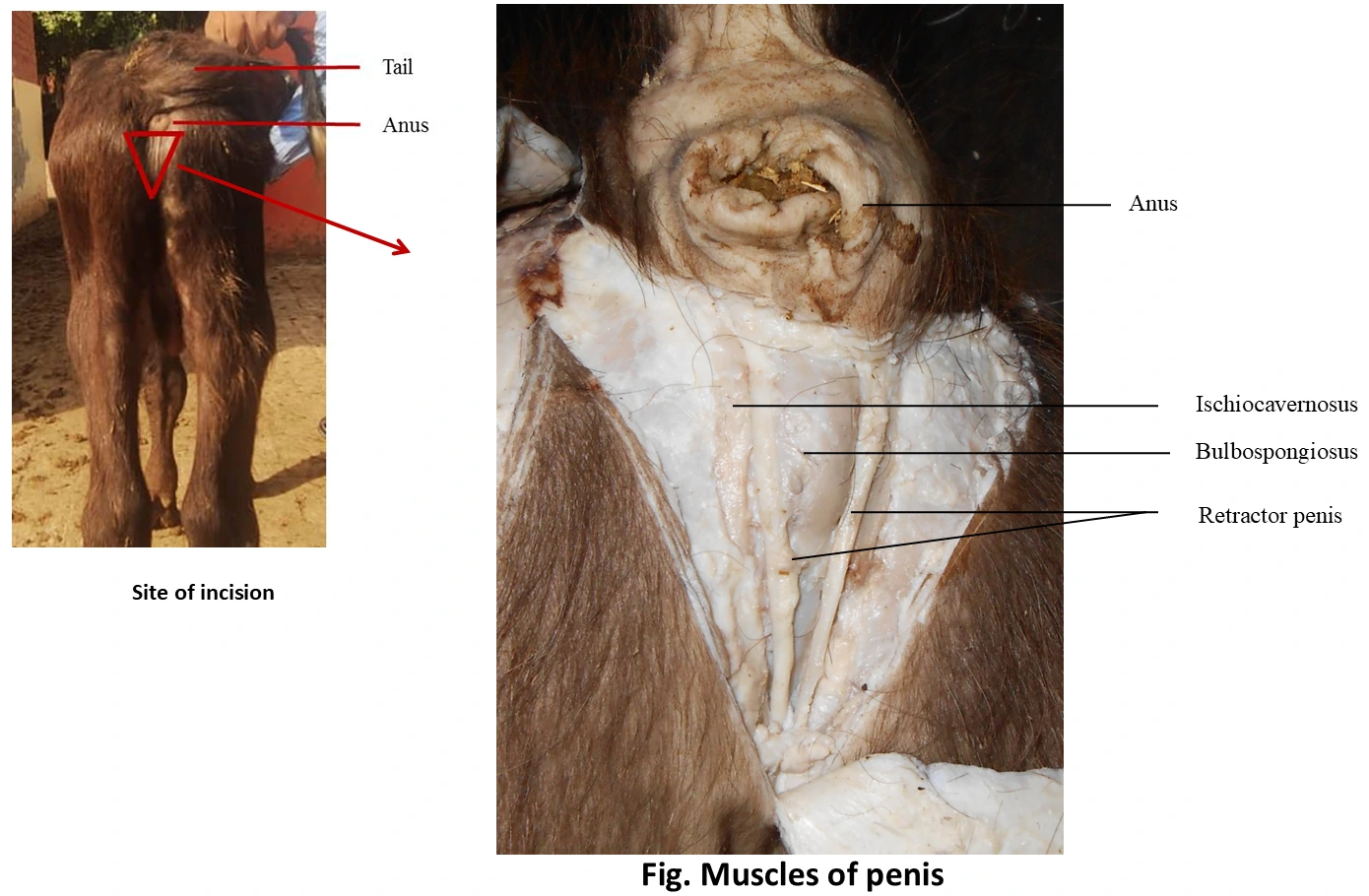
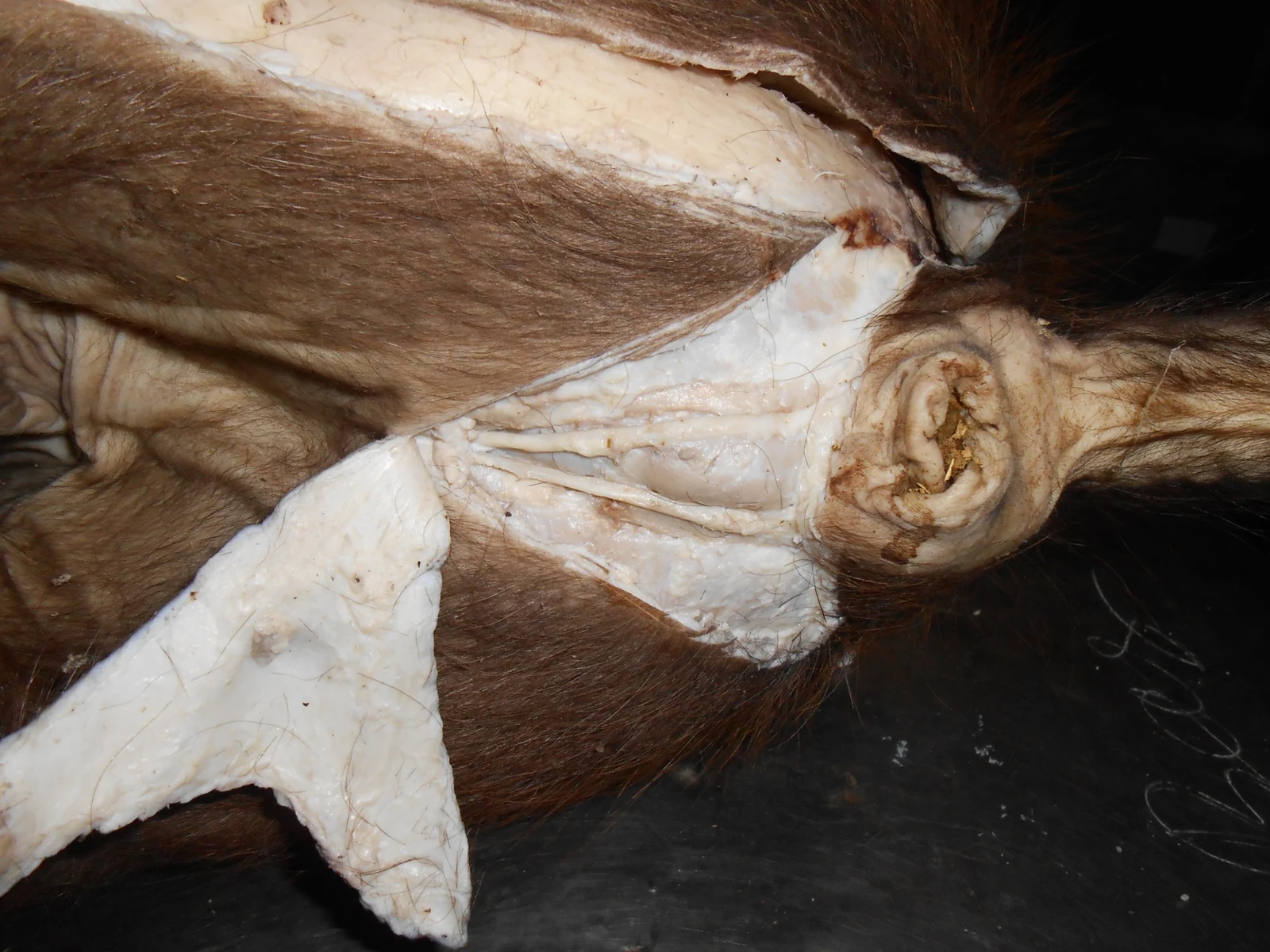
Penis: The bull, ram and boar have a predominantly fibroelastic penis whose sigmoid flexure straightens during erection, producing elongation with relatively little increase in diameter. In ruminants the flexure is postscrotal; in the boar it is prescrotal/approximately at the level of the testes. The retractor penis muscle restores the flexure after erection. The horse and dog have a musculocavernous penis, and the dog also has an os penis.
Inguinal Canal: Oblique passage through the caudoventral abdominal wall. The deep ring is bounded principally by the caudal border of internal abdominal oblique and the inguinal ligament; the superficial ring is a slit in the external abdominal-oblique aponeurosis. Its contents vary by sex and species and include the spermatic cord in males, the vaginal process/round ligament in females, the external pudendal vessels and the genitofemoral nerve.
Pre-pubic Tendon: Strong fibrous attachment of the rectus abdominis and pectineus to the cranial border of the pubis. Important in heavy pregnant mares — rupture leads to ventral abdominal swelling and inability to foal.
| BULL | Fibroelastic penis with sigmoid flexure. Vesicular glands very large and lobulated. Scrotum pendulous. |
| STALLION | Musculocavernous penis (large erection). No sigmoid flexure. Vesicular glands smooth-walled. |
| BOAR | Spiral/corkscrew tip of glans. Very large bulbourethral glands. Sigmoid flexure present. |
| DOG | Os penis with bulbus glandis (locking 'tie' during mating). Prostate is the only accessory gland — common BPH and prostatitis in older dogs. |
| TOM CAT | Small spines on glans penis — induced ovulation in queen. |
Explore the hidden mechanics of why structures are present, absent or modified across domestic and wildlife species—and how each anatomical design supports movement, function and clinical practice.
Explanation goes here.