
Veterinary Anatomy Studio
Developed at ICAR–IVRI, Bareilly
Structured veterinary anatomy notes for B.V.Sc., M.V.Sc. and DVM students—from structure to function.
Educational resource developed at the Veterinary Anatomy Section, ICAR-Indian Veterinary Research Institute (ICAR-IVRI), Bareilly.
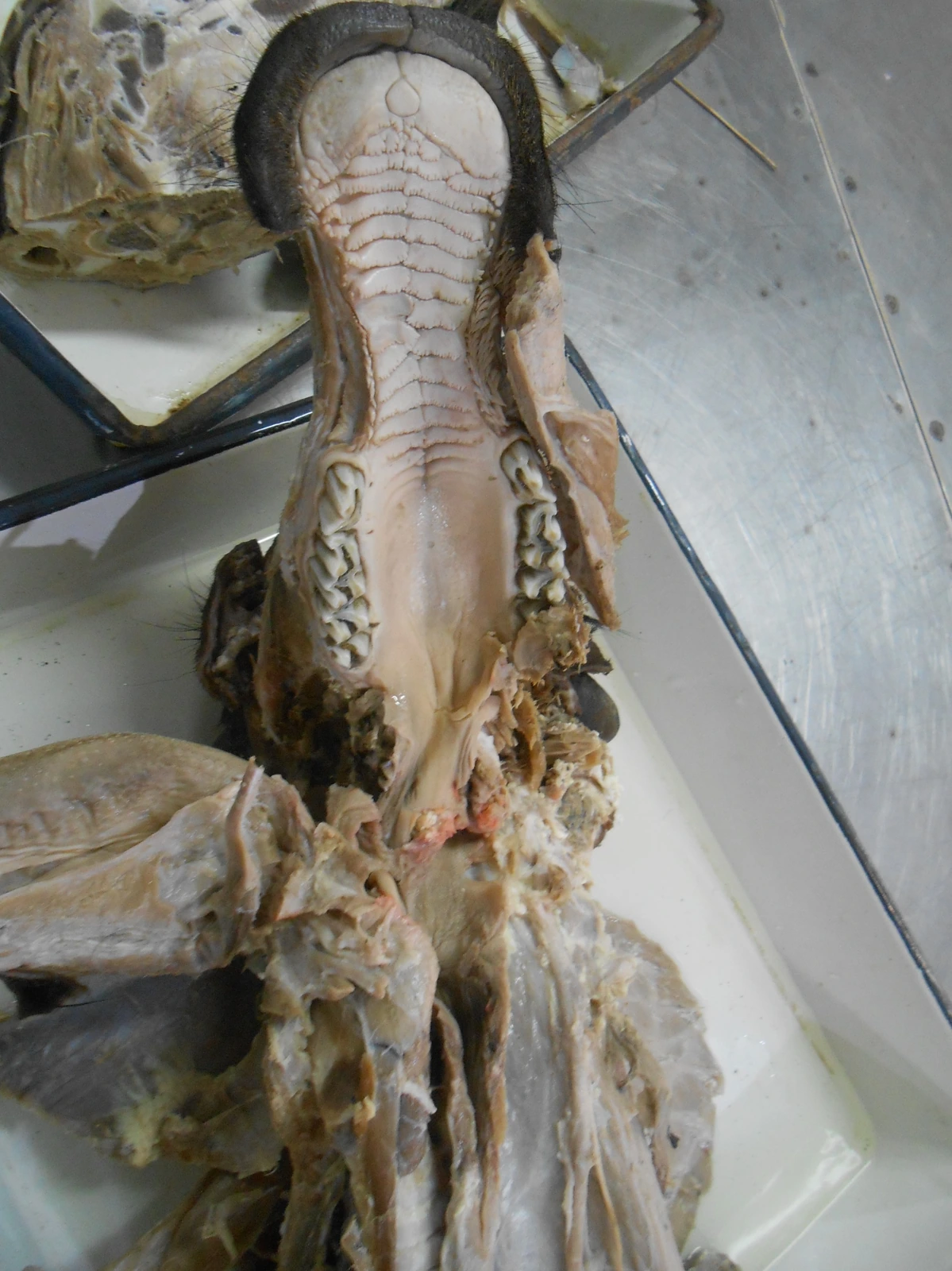
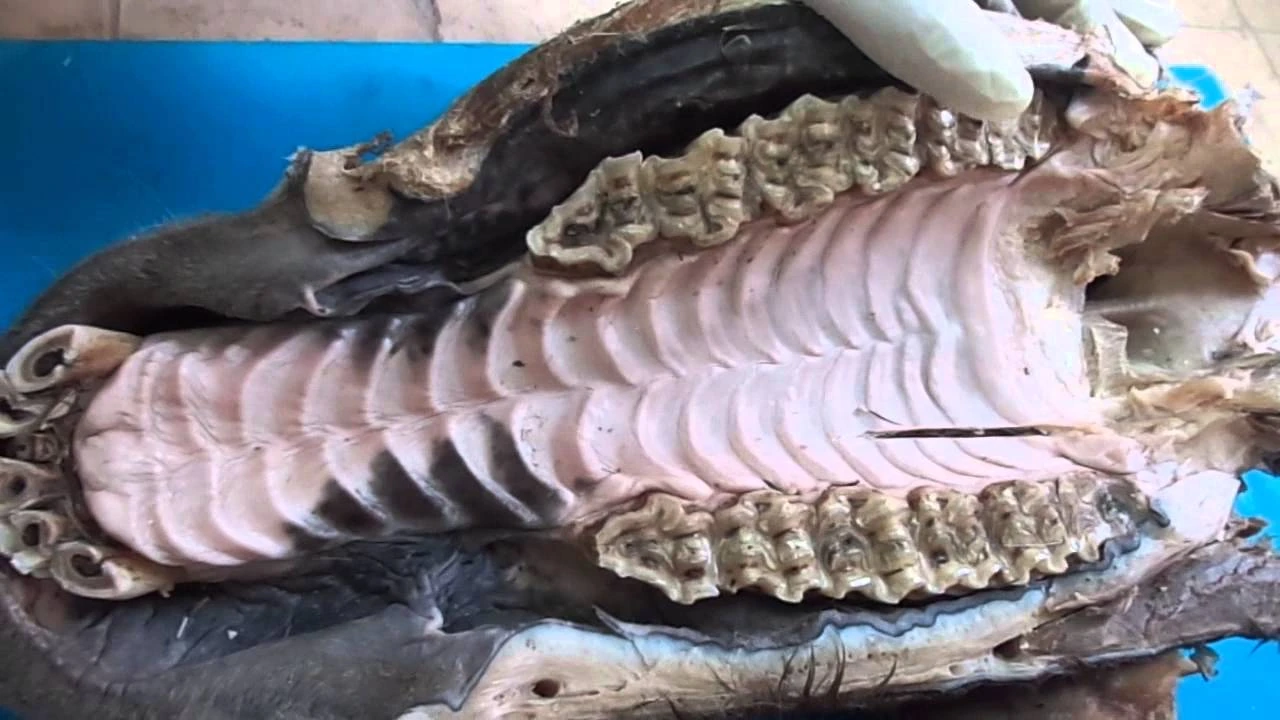
HARD PALATE (Palatum durum):
• Bony plate forming the roof of the oral cavity.
• Formed by palatine processes of incisive (rostral), maxillary (middle), palatine bones (caudal).
• Covered with thick keratinized mucosa with transverse ridges = rugae palatinae — help direct food back during chewing.
• Anteriorly (rostrally) has the incisive (palatine) papilla with the openings of the incisive ducts connecting oral cavity to vomeronasal organ (Flehmen behavior).
SOFT PALATE (Palatum molle / Velum palatinum):
• Muscular curtain extending caudally from the hard palate.
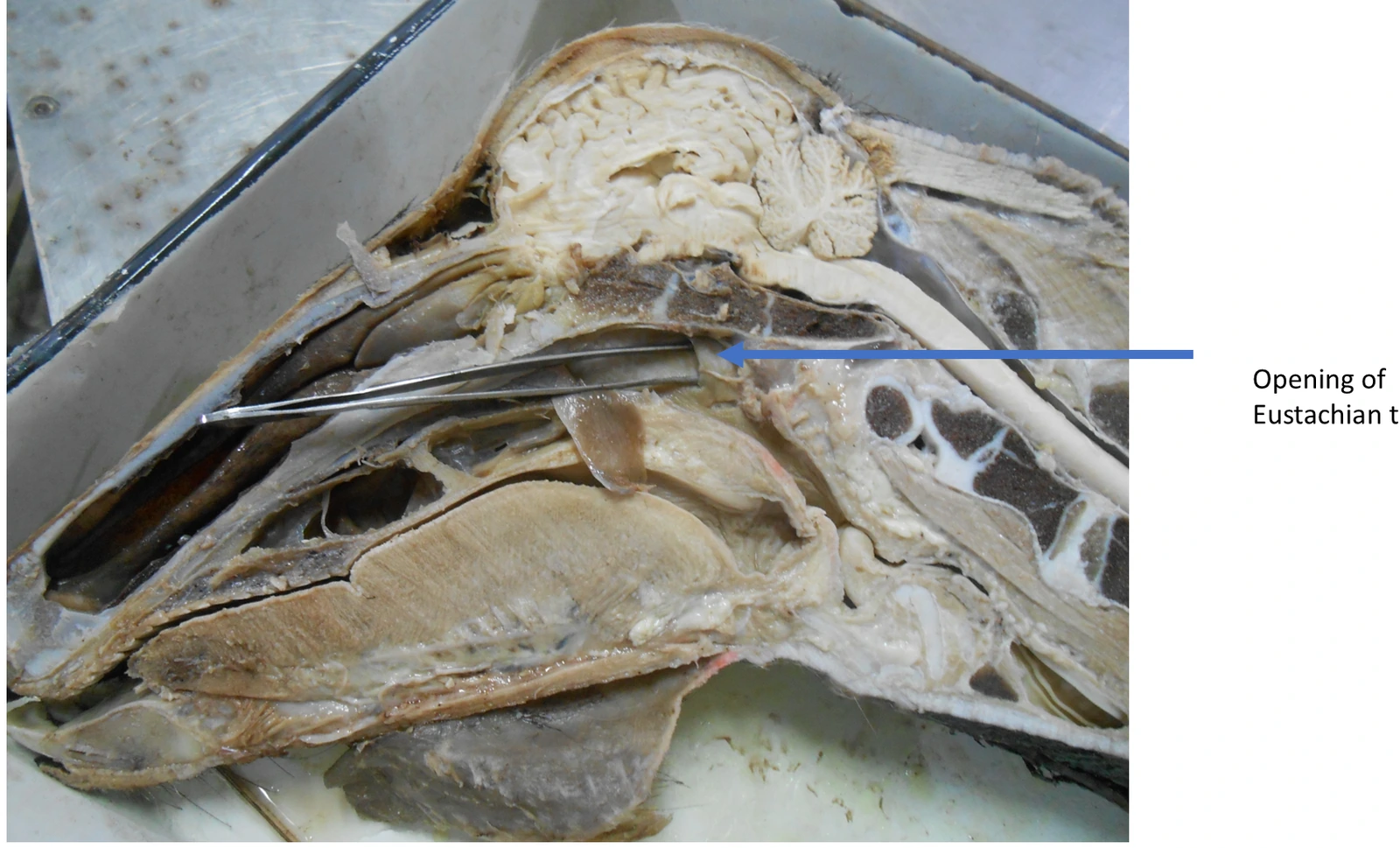
• Separates nasopharynx (above) from oropharynx (below).
• Domestic mammals generally lack a distinct human-like uvula; the caudal free border continues into the palatoglossal and palatopharyngeal arches.
• Muscles: tensor veli palatini, levator veli palatini, palatinus, palatoglossus, palatopharyngeus.
• Length matters! Horse soft palate is very long → reaches epiglottis caudally → palate seals the oropharynx, making horse an obligate nasal breather (cannot mouth-breathe even during exercise).
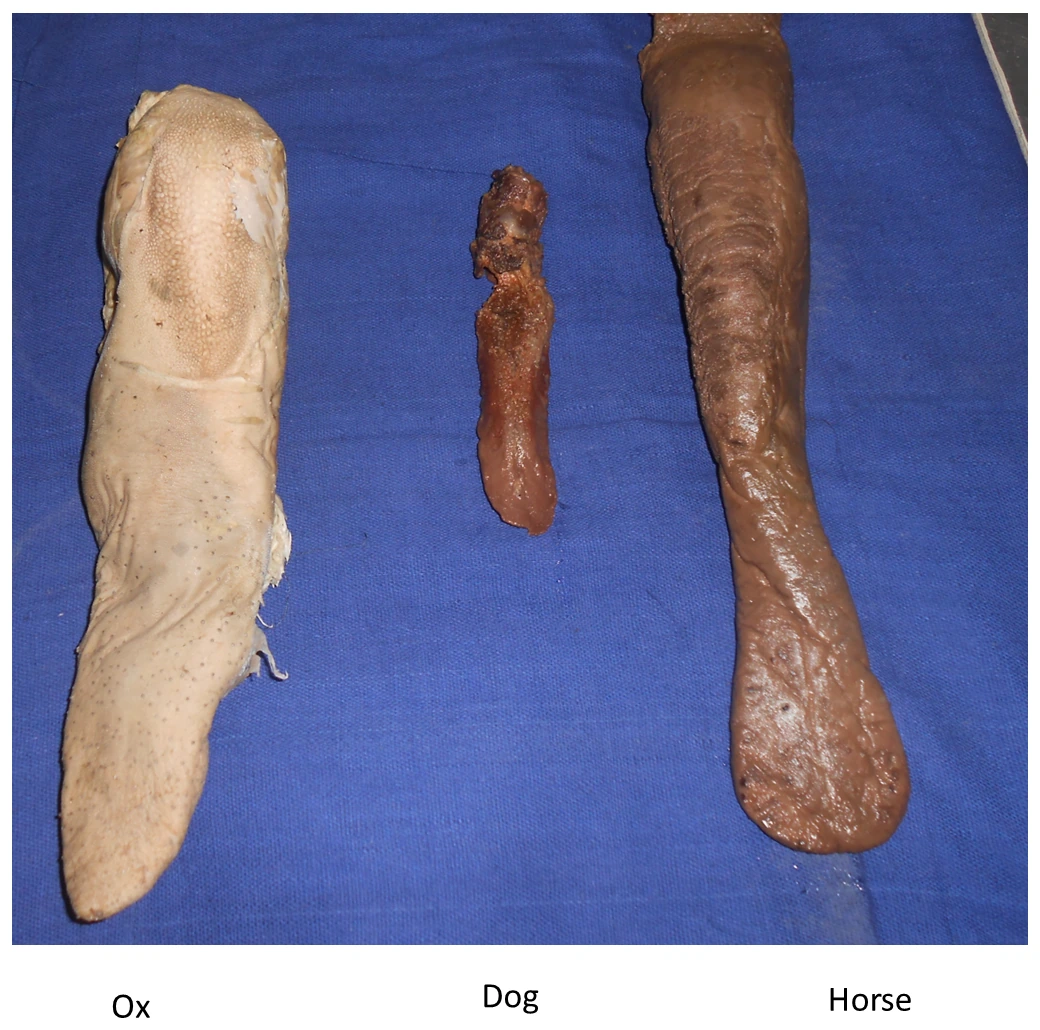
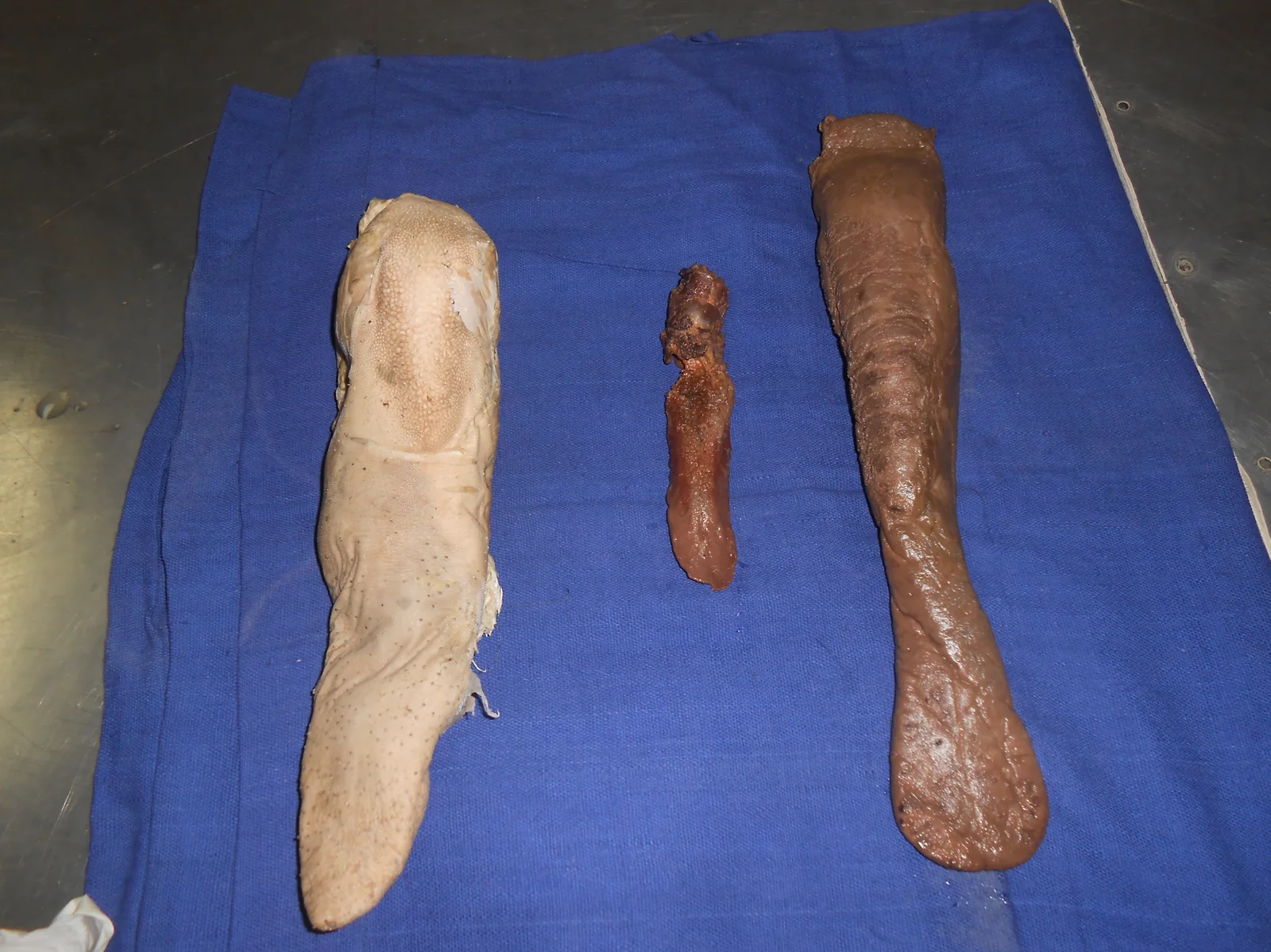
TONGUE (Lingua):
• Muscular organ — 3 parts: apex (free tip), body, root.
• Lingual frenulum — ventral attachment.
• OX TORUS LINGUAE = firm dorsal swelling on the body of the tongue — pad of muscle + connective tissue used to grasp grass against the dental pad.
• Mucosal papillae:
– Filiform — rough, conical, all over dorsal surface; mechanical (cat's tongue is sandpaper because of these).
– Fungiform — mushroom-shaped; few; contain taste buds.
– Vallate (Circumvallate) — large, flat-topped, surrounded by a moat; few (4-8); contain numerous taste buds. At root.
– Foliate — leaf-like; on lateral root.
– Lenticular — only in ruminants; on torus linguae; mechanical.
• Innervation: motor — CN XII (hypoglossal); sensory — CN V (general, anterior 2/3) + CN VII (taste, anterior 2/3) + CN IX (general & taste, posterior 1/3) + CN X (epiglottic).
PHARYNX:
• Muscular tube — common to digestive + respiratory; ~10-15 cm in cow.
• 3 parts:
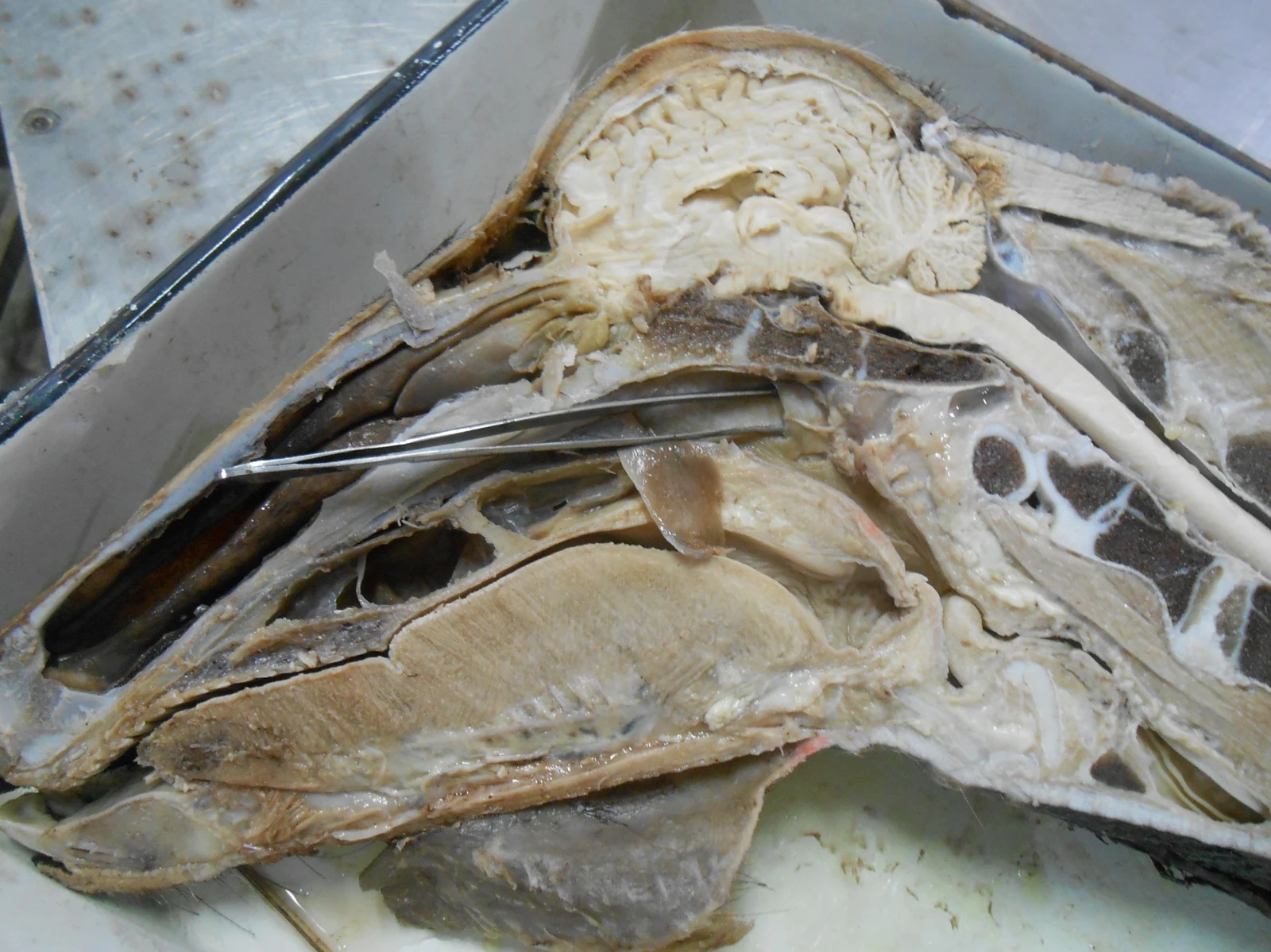
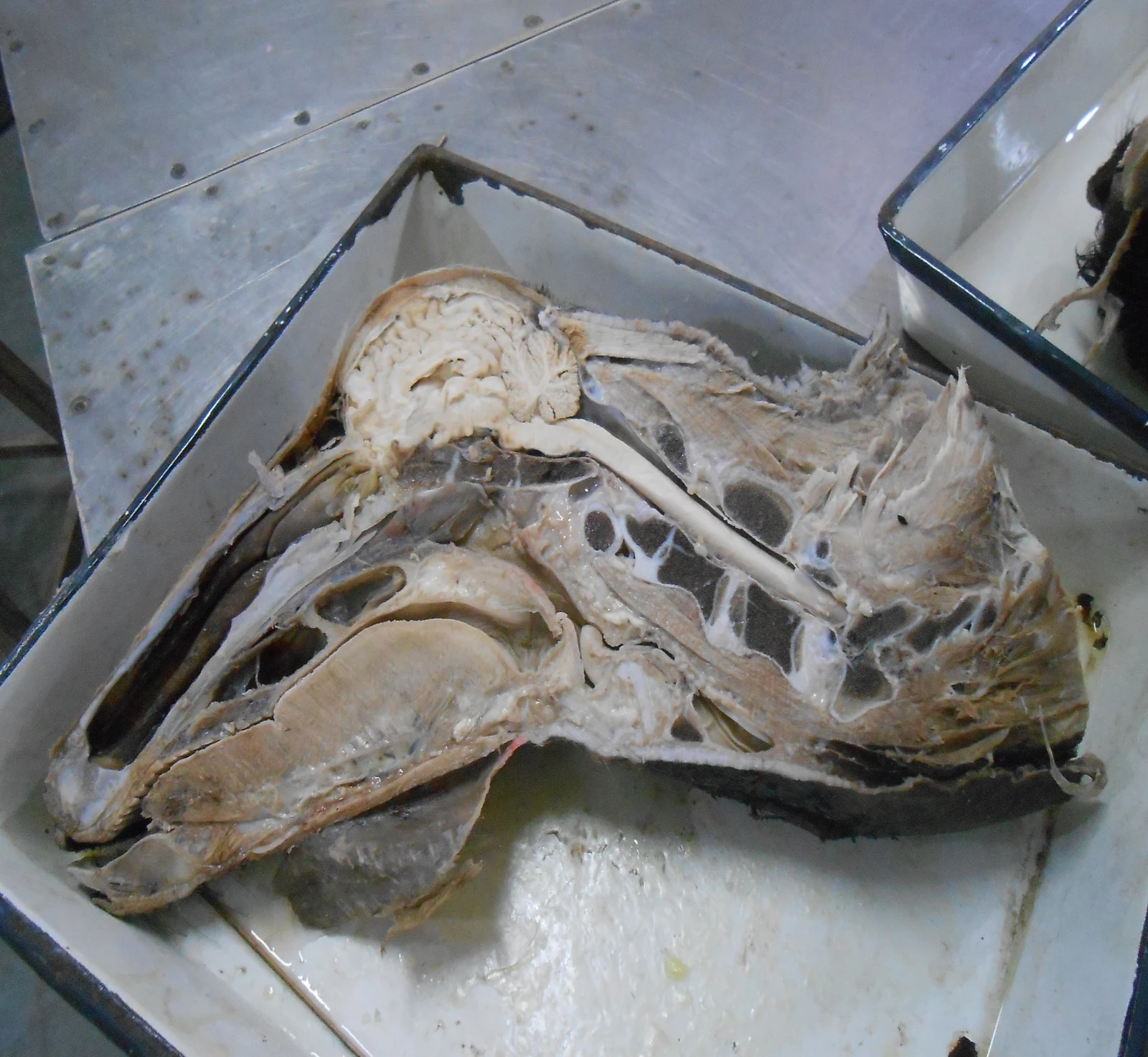
– Nasopharynx — above soft palate; communicates with nasal cavity (via choanae) and middle ear (via Eustachian tube).
– Oropharynx — behind soft palate; bounded by tongue + soft palate; communicates with oral cavity (via fauces).
– Laryngopharynx — caudal to oropharynx; opens into oesophagus + larynx.
• Pharyngeal recess is dorso-caudal extension above the oesophageal opening.
• Crossing of pathways: respiratory tract crosses the digestive tract at the pharynx — the epiglottis covers the larynx during swallowing.
| OX | Torus linguae present. Lenticular papillae on torus. Soft palate short. |
| HORSE | Long soft palate; the epiglottis normally lies dorsal to its caudal margin, producing obligate nasal breathing. Dorsal displacement of the soft palate (DDSP) is abnormal and can limit performance. |
| DOG | Sensitive cooling tongue (panting). Brachycephalics have elongated soft palate → BOAS. |
| CAT | Filiform papillae heavily keratinized → sandpaper tongue for grooming and stripping flesh. |
Explore the hidden mechanics of why structures are present, absent or modified across domestic and wildlife species—and how each anatomical design supports movement, function and clinical practice.
Explanation goes here.