Educational resource developed at the Veterinary Anatomy Section, ICAR-Indian Veterinary Research Institute (ICAR-IVRI), Bareilly.
📝 STANDARD DESCRIPTION:
High-Yield Points:
• Thin sheet-like muscles in the skin of the head; INNERVATED BY FACIAL NERVE (CN VII).
• Orbicularis oris — sphincter of mouth.
• Orbicularis oculi — closes eyelids ('blink' reflex).
• Levator nasolabialis — lifts upper lip & nostril (Flehmen response).
• Buccinator — cheek muscle, keeps food between molars.
• Caninus, Levator labii superioris, Depressor labii inferioris — lip movers.
• Auricular muscles (rostral, dorsal, caudal, ventral) — move pinna; very large in cattle/horse.
• Cutaneous faciei — superficial skin muscle of face (insect-twitch).
Damage to CN VII = facial nerve paralysis: ear droop, ptosis, lip droop, deviated muzzle, no menace response.
📚 DETAILED DESCRIPTION:
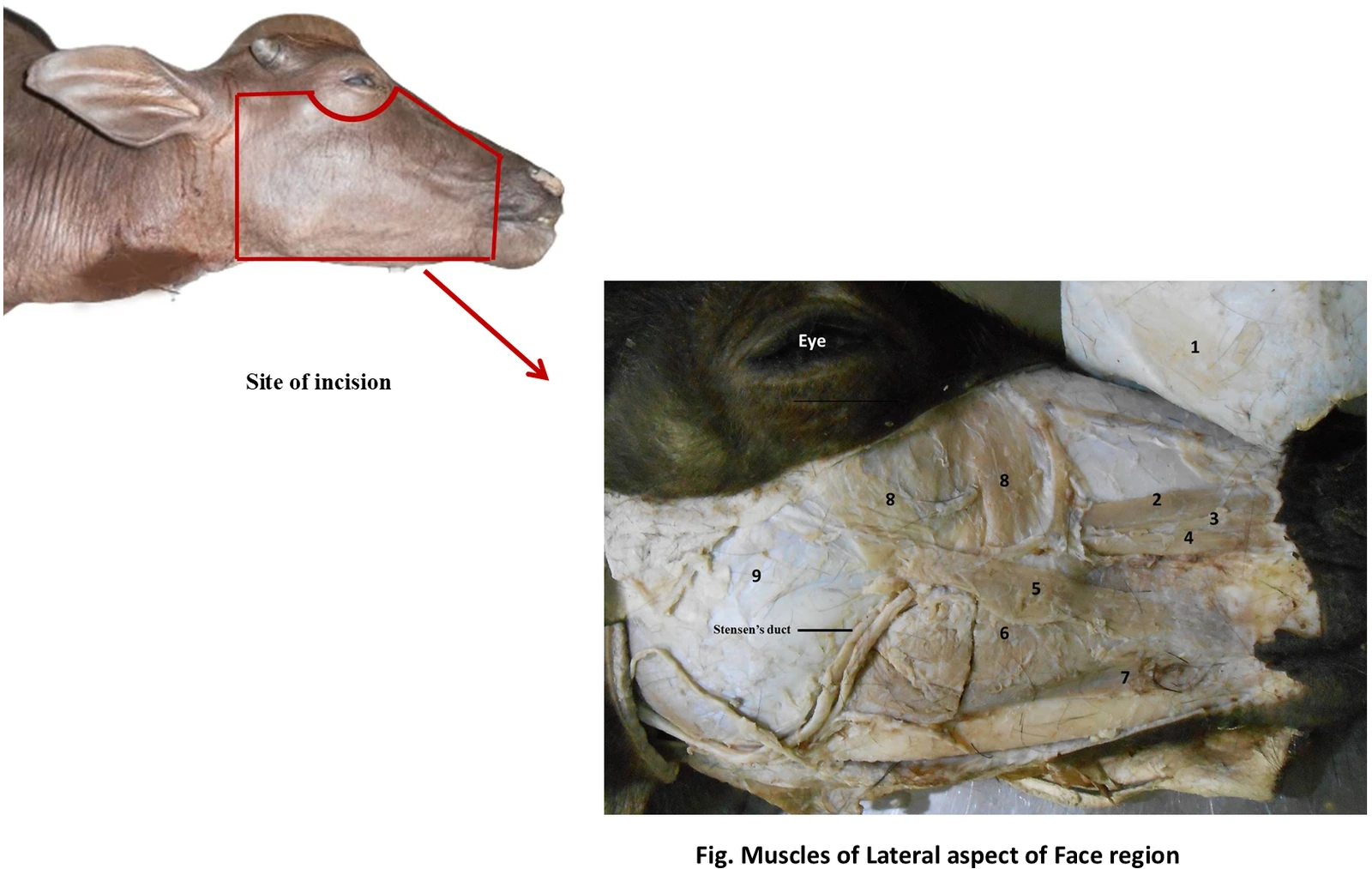
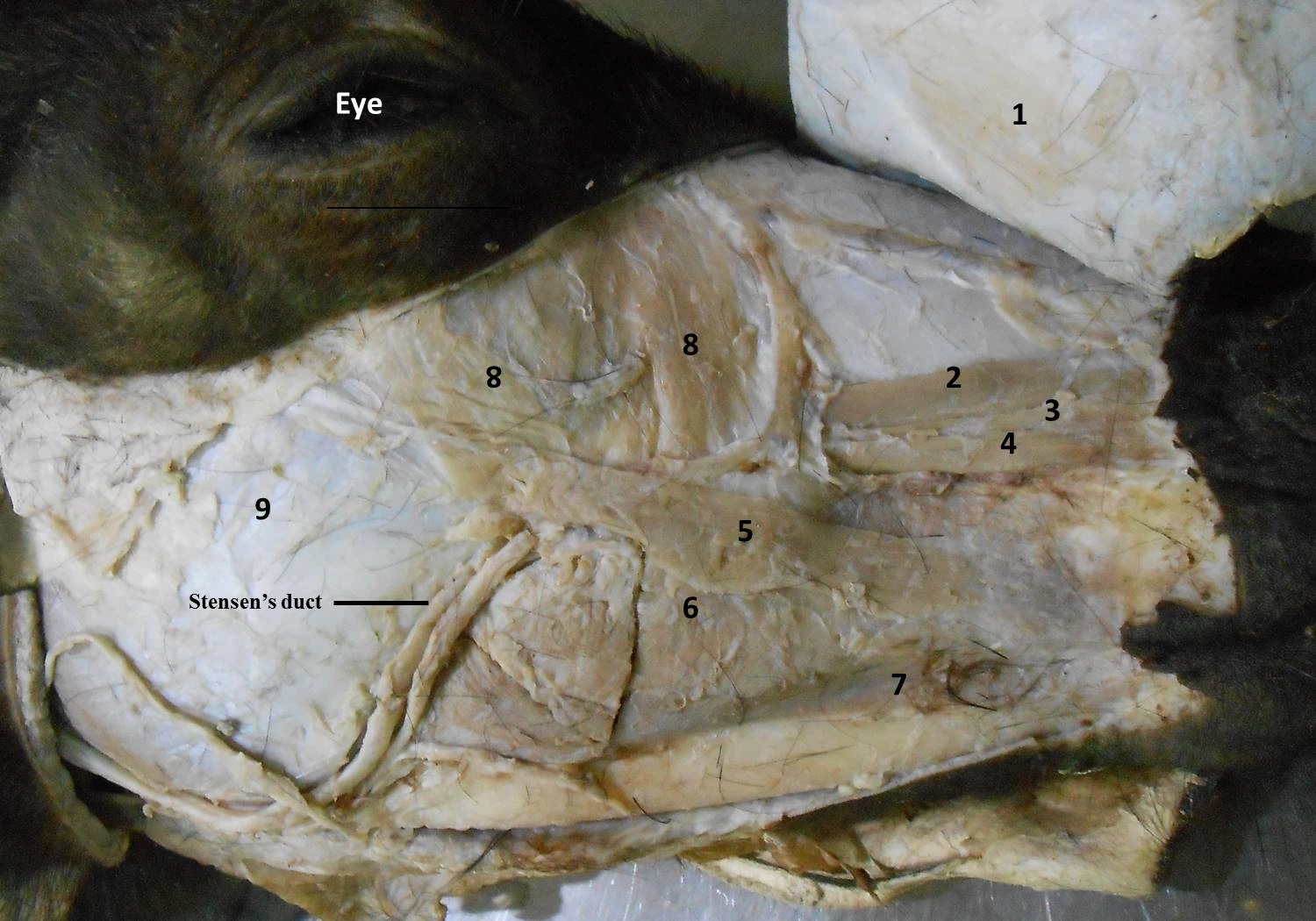
FACIAL (MIMETIC) MUSCLES — CN VII TERRITORY
The facial muscles are thin, flat, often paper-like sheets that lie just under the skin and produce the visible movements of face, ear, eyelid, lip, and nostril. ALL are innervated by the facial nerve (CN VII) — paralysis of CN VII produces the classic 'facial paralysis' picture (drooped ear, ptosis, deviated muzzle).
1. SPHINCTER MUSCLES OF FACE:
• Orbicularis Oris — closes the lips. Acts during prehension and suckling.
• Orbicularis Oculi — closes the eyelids. Critical for the corneal protective blink and the menace response.
2. LIP-LIFTING / NASAL DILATORS:
• Levator Nasolabialis — lifts upper lip and dilates nostril; basis of Flehmen response in cattle/horse.
• Levator Labii Superioris (Caninus) — lifts upper lip.
• Depressor Labii Inferioris — lowers lower lip.
• Mentalis — chin elevator.
• Zygomaticus — pulls corner of mouth back & up.
3. CHEEK MUSCLE:
• Buccinator — keeps food between the molars during chewing; prevents pocketing in cheek.
4. AURICULAR (EAR) MUSCLES:
Domestic mammals have 14-21 auricular muscles, grouped:
• Rostral auricular (push pinna forward).
• Dorsal auricular (raise).
• Caudal auricular (pull back).
• Ventral auricular (lower).
Largest in cattle/horse where the ear has wide range of motion (acoustic + thermal control).
5. CUTANEOUS FACIEI / PLATYSMA:
• Subcutaneous sheet over the face & cheek, allowing the skin to twitch off insects (panniculus reflex of head).
CLINICAL CN VII PALSY:
• Drooped ear, ptosis, drooped lip, deviated muzzle to the contralateral side, no blink, food spillage from mouth.
• Causes: middle ear infection (otitis media), dehorning trauma at horn base, facial trauma, idiopathic.
// COMPARATIVE ANALYSIS
| OX |
Cornual nerve (sensory branch of CN V) supplies horn base; CN VII branches commonly damaged during dehorning if hot-iron/saw is misplaced. |
| HORSE |
Auricular muscles very developed (ear position is part of behaviour). Facial nerve crosses ramus of mandible — vulnerable when horse leans on hard halter ('halter neuropathy'). |
| DOG |
Brachycephalic dogs have weakened mimetic muscles → sloppy facial expression. |
CLINICAL RELEVANCE
Facial Nerve Paralysis (CN VII): Lop ear, ptosis, lip droop, drooling. Common in cattle after dehorning or otitis media. Test: Menace response, palpebral reflex, ear retraction.